Spring arrives in St. Louis and the to-do list gets longer. If your home’s exterior made it through another winter looking a little worse for wear, the instinct to grab a brush and handle it yourself makes sense. It feels manageable: buy some paint, put it on the house, done.
The reality is a bit more involved, and the consequences of skipping steps aren’t just cosmetic. Exterior paint failures can lead to wood rot, moisture damage, and surface deterioration that ends up costing more to address than a professional paint job would have. After 20 years of painting homes and commercial properties across St. Louis and St. Charles, we’ve seen most versions of how a DIY exterior can go sideways. Here are the mistakes that come up most often.
For Homeowners: DIY Exterior Painting Mistakes
Skipping or rushing surface prep
Prep work — cleaning, scraping, sanding, caulking, and priming — can account for more than half the time on a well-executed exterior job, and it’s also the part that’s easiest to shortcut when you’re doing it yourself on a weekend. Painting over dirty, chalky, or peeling surfaces is the most common reason exterior paint fails ahead of schedule. The new coat doesn’t have anything solid to bond to, and within a year or two it starts to lift and peel. At that point you’re dealing with the original problem plus the work of redoing everything on top of it.
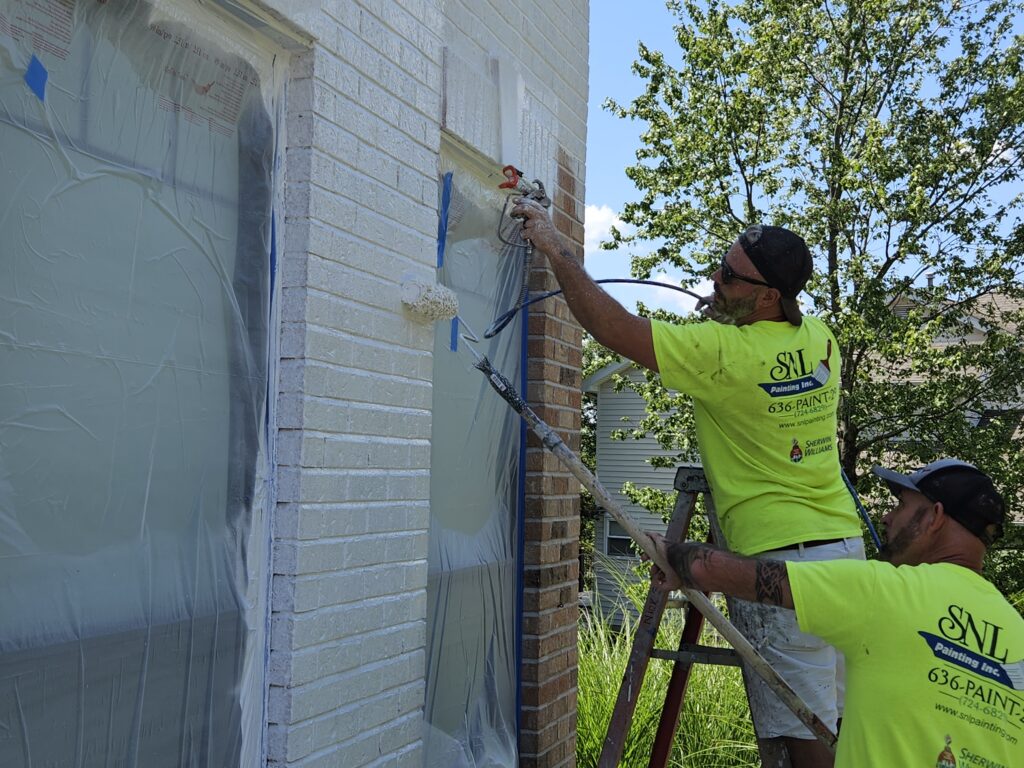
At SNL Painting, our thorough preparation process is most of the job. The paint is the finish that protects the prep.
Using the wrong products
Not all exterior paints perform the same way, and choosing based on price or whatever’s available at the hardware store can lead to an end result you weren’t expecting. Paint sheen, formulation, and quality vary quite a bit, and the wrong choice for your siding material, sun exposure, or local climate will show up relatively quickly. St. Louis weather puts exterior paint through its paces — hot, humid summers, unpredictable springs and falls, and winters that aren’t easy on wood and masonry. The right product for your job takes all the factors of your home, how it faces, weather conditions and more into account. Experienced estimators prescribe the right coatings for your project.
Painting in the wrong conditions
There’s a reason professional exterior painters keep a close eye on the forecast. Painting in direct sun, high humidity, or temperatures that are too high or too low affects how paint cures, and paint that doesn’t cure properly won’t perform the way it should regardless of the quality of the product. A lot of DIY exterior projects also underestimate how long the full job takes, which means racing to finish before the weather changes or working in conditions that may affect the final result. A job started on a mild morning can run into trouble if temperatures drop before the paint has fully set.
Skipping caulk and minor repairs
Gaps around windows, doors, and trim are entry points for moisture. Caulking before painting seals those gaps and protects what’s underneath. When that step gets skipped, or done poorly, water can get in over time, causing wood to deteriorate, and the need for a more involved carpentry project. The same thinking applies to any existing damage you find during prep. A fresh coat of paint over a soft or damaged surface covers the problem temporarily, but addressing it before painting is always the better call for the longevity of the work.
For Property Managers and Commercial Facilities: A Few Additional Considerations
Most of what applies to residential exteriors applies to commercial properties as well, and in some ways the stakes are higher. When you’re responsible for a larger building, a multi-unit property, a school, or a retail or office space, the margin for error on an exterior project is smaller and the cost of rework is more significant.
Scale changes the math
On a commercial exterior, surface prep or product selection issues don’t affect one wall — they affect a much larger footprint. DIY exterior painting mistakes at that scale takes more time, more material, and more coordination to address, and it reflects on the property in ways that matter to tenants and visitors. Commercial surfaces also tend to be more varied than residential ones. Masonry, EIFS, metal panels, concrete, and wood trim all require different preparation and coating approaches, and experience with residential work doesn’t automatically transfer to knowing how to handle each of those correctly.
Planning around operations matters
Commercial exterior projects benefit from being scoped and planned well in advance. Getting the full scope defined early, coordinating materials and crew availability, and building a realistic timeline makes the difference between a project that fits cleanly into your schedule and one that creates more disruption than expected. Our team does this kind of work regularly and knows how to structure a project so that it moves efficiently without getting in the way of everything else happening on the property.
Insurance and access
Commercial painting at height requires appropriate equipment, insurance coverage, and in some cases permits depending on the scope of the work. Working with a team who carries the right coverage and operates to the standards the job requires protects the property owner and manager and ensures the project is handled properly from start to finish.
Reach out to the SNL Painting team
A well-executed exterior paint job protects your investment, improves the way your home or building presents itself, and holds up for years when it’s done right. Getting there is about more than the paint itself — it’s the preparation, the product selection, and the process that make the difference between a job that lasts and one that needs to be redone ahead of schedule.
If your exterior is on your list this spring or summer, we’d love to take a look. Reach out through our contact form for a free estimate and we’ll walk through the project with you.