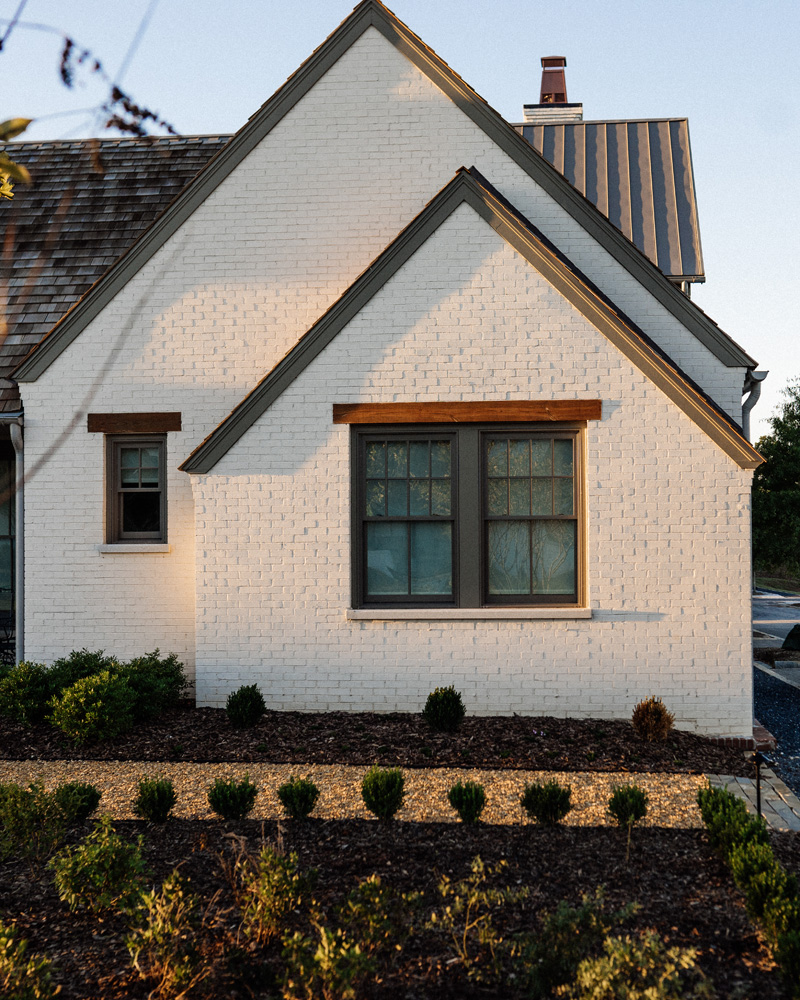
When homeowners are planning an exterior painting project, most of the early conversation is about color. Sheen tends to come up later, even though it has a real effect on how the finished job looks and how long it holds up.
The right sheen for an exterior varies by surface — siding, trim, doors, and specialty areas like soffits and decking each have different requirements. Getting it right makes a difference in durability, appearance, and how well the paint holds up to St. Louis weather over time. Here’s how we approach it on exterior projects.
Siding: Satin or Low-Sheen
For the main body of a house — it doesn’t matter if it’s wood, fiber cement, vinyl, or another siding material — satin or a low-sheen finish is generally the right call. It provides enough sheen to be cleanable and weather-resistant without reflecting so much light that it draws attention to surface imperfections.
This matters more than it might seem. Exterior siding is rarely perfectly smooth, and a higher-sheen finish reflects light in a way that makes texture, minor repairs, and surface variation more visible. A satin finish is more forgiving, and on most homes it looks intentional rather than flat.
Flat or matte finishes are occasionally used on exterior siding, but they’re harder to clean and less durable over time. Unless there’s a specific reason to go flat, satin is the more practical choice for siding in this climate.
Trim, Fascia, and Soffits: Semi-Gloss
Trim work like window casings, door surrounds, fascia boards, or corner boards benefit from a step up in sheen. Semi-gloss is the standard choice for most exterior trim because it creates clean, defined lines that read well against the siding, holds up to moisture and direct weather exposure better than lower-sheen finishes, and is easier to wipe down when it gets dirty.
The contrast between a satin body and semi-gloss trim is subtle but noticeable, and it gives the exterior more visual definition without requiring a color change to achieve it.
Soffits are worth mentioning separately. They’re protected from direct weather but can be prone to moisture from the roof line, and semi-gloss holds up better in those conditions than a flat or eggshell finish would.
Front Doors: Semi-Gloss or Gloss
Front doors take more physical contact than any other exterior surface, and they’re also one of the more visible parts of a home’s exterior. Semi-gloss is a reliable choice that balances durability with appearance. Full gloss is also common on front doors and works well when you want the door to stand out, particularly on homes where the door color is a contrast accent against the siding.
The main thing to know about gloss finishes on doors is that surface preparation matters more. A high-gloss finish reflects light evenly and will show any imperfections, like dents, grain or uneven patches, more clearly than a lower sheen would. On a door in good condition, gloss looks excellent. On a door that needs repair work, it’s worth addressing those issues before going up in sheen.
Decks and Fences
Decks and fences are worth addressing separately because the product conversation is different. Horizontal deck surfaces take direct sun, rain, and foot traffic in a way that vertical siding doesn’t, and a penetrating stain is usually the right product for those surfaces rather than a film-forming paint. Stain soaks into the wood rather than sitting on top of it, which handles the natural expansion and contraction of wood through temperature changes better than paint does over time.
For painted fences or railings, the same general approach as trim applies — semi-gloss holds up well and is easy to maintain.
A Few Other Factors Worth Considering
Sun exposure. Higher-sheen finishes can amplify the effect of direct sun on a surface over time. On south- and west-facing walls that take a lot of afternoon sun, a slightly lower sheen than you might otherwise choose can help the finish hold its color longer.
Paint quality. Sheen and quality aren’t the same thing, and a lower-quality paint in a higher sheen isn’t automatically better than a higher-quality paint in a lower sheen. The formulation matters as much as the finish level, and it’s worth investing in a product that’s built for exterior performance in this climate.
The surface condition. As mentioned with doors, higher-sheen finishes are less forgiving of surface imperfections. If a surface needs significant prep work or repair, that work needs to happen before the paint goes on — going up in sheen doesn’t cover problems, it tends to highlight them.
Sheen is one of the decisions we work through with every customer before an exterior project starts. It’s a straightforward conversation once you know what questions to ask, and getting it right makes a difference in how the finished job looks and how long it lasts.
If you’re planning an exterior project in the St. Louis area and want to talk through product and finish decisions before you get started, reach out through our contact form for a free estimate.